PMDD
What is PMDD?

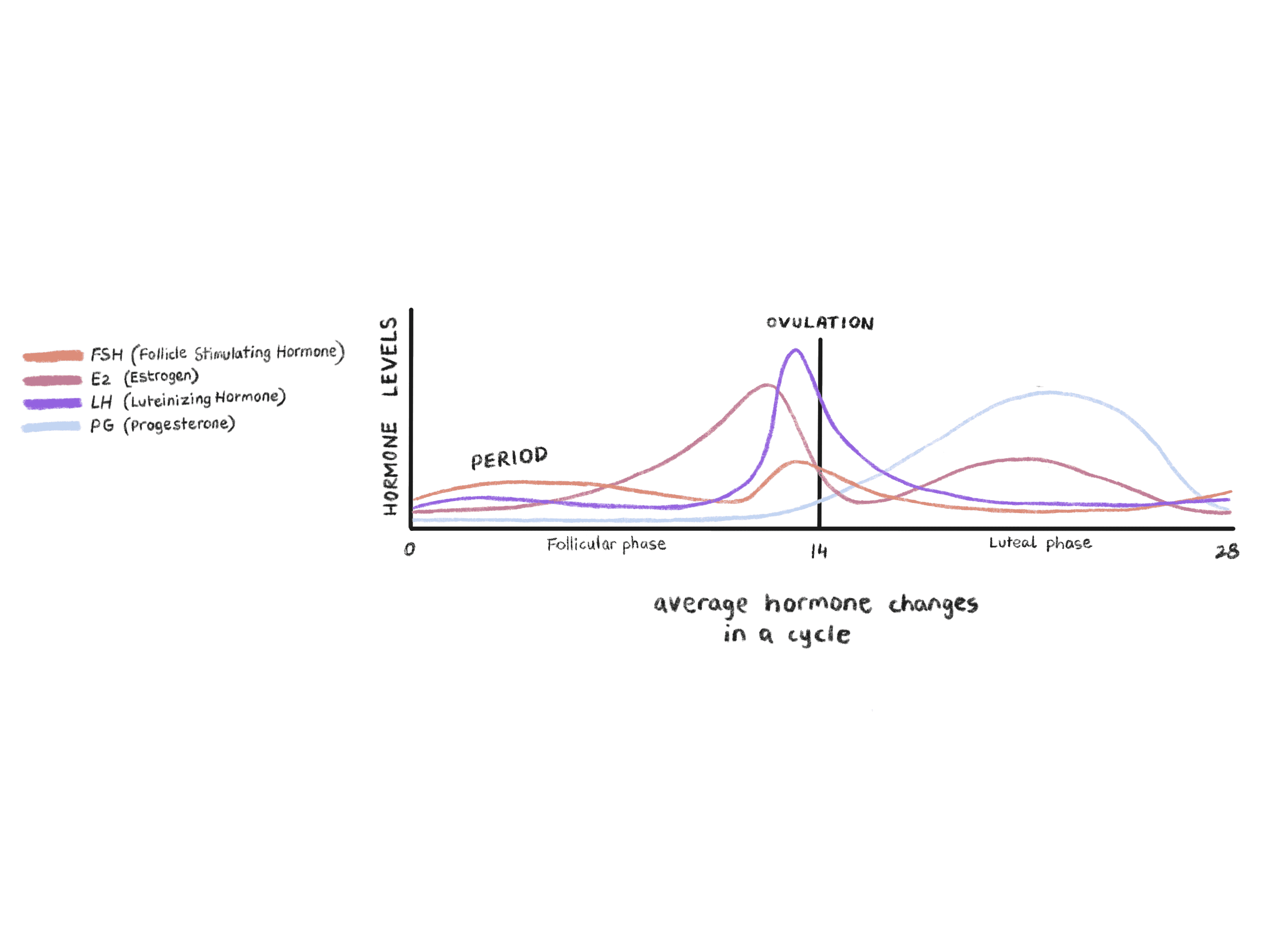
Premenstrual Dysphoric Disorder (PMDD) is a cyclical, hormone-based mood disorder that an individual may experience during the luteal phase of their menstrual cycle.
You will notice that it typically fades within a few days of menstruation. This condition affects about 5.5% of women and other menstruators of reproductive age making it around as common as diabetes in women!
In fact, the lack of awareness of this disorder leads to women spending 12 years and seeing an average of 6 different doctors just to a get a diagnosis. (Yes, these numbers are 100% real: read more). Though it's closely linked to the menstrual cycle, PMDD is not caused by a hormone imbalance. Instead, it stems from a severe adverse reaction to the natural fluctuations of estrogen and progesterone that occur monthly between ovulation and menstruation. Researchers suspect that PMDD is a cellular disorder, and ongoing studies aim to pinpoint the precise causes of its symptoms.
The severity of PMDD can vary. You might find that your symptoms range from mild to severe, potentially disrupting your daily life significantly. Remember, there is no singular experience of PMDD; it presents differently in everyone. Here are some symptoms you might experience:
Mood/emotional changes (e.g., mood swings, feeling suddenly sad or tearful, or increased sensitivity to rejection)*
Irritability, anger, or increased interpersonal conflicts*
Depressed mood, feelings of hopelessness, feeling worthless or guilty*
Anxiety, tension, or feelings of being keyed up or on edge*
Decreased interest in usual activities (e.g., work, school, friends, hobbies)
Difficulty concentrating, focusing, or thinking; brain fog
Tiredness or low energy levels
Changes in appetite, food cravings, or overeating
Hypersomnia (excessive sleepiness) or insomnia (trouble falling or staying asleep)
Feeling overwhelmed or out of control
Physical symptoms such as breast tenderness or swelling, joint or muscle pain, bloating or weight gain
Note: According to the International Association for Premenstrual Disorders (IAPMD), a diagnosis of PMDD requires the presence of at least five of these symptoms, and at least one must be a "core emotional symptom"; (indicated by the asterisks above). PMDD is a serious condition that requires medical attention and a comprehensive treatment plan. By understanding your symptoms and seeking appropriate care, you can manage your PMDD and improve your quality of life!
How is PMDD different from PMS?
PMS (Premenstrual Syndrome) involves recurrent emotional and physical symptoms before the period, but these symptoms are usually mild to moderate and do not cause marked impairment in daily functioning. PMDD sits at the severe end of this spectrum, with more intense mood symptoms that meet specific diagnostic criteria and substantially interfere with quality of life.
Key differences include the requirement in PMDD for at least five symptoms, with at least one being a core mood symptom (like marked depression, irritability, or anxiety), and the level of impairment in work, school, social life, or relationships. In PMDD, symptoms are tightly linked to the luteal phase and remit shortly after menstruation begins, whereas in other mood disorders symptoms are more continuous across the cycle.
What might a comparison table of PMS vs PMDD look like?
Feature | PMS | PMDD |
|---|---|---|
Symptom intensity | Mild–moderate, bothersome | Moderate–severe, disabling |
Number of symptoms required | Not strictly defined | ≥5, with ≥1 core mood symptom |
Functional impairment | Usually limited | Clear impairment in work, school, or relationships |
Diagnostic tracking | Often clinical history | Requires prospective tracking for ≥2 cycles |
What are the core emotional and physical symptoms of PMDD?
Diagnostic criteria (DSM-5/ICD-11–aligned) require at least five symptoms, with at least one being a mood or emotional symptom such as-
Marked affective lability (mood swings)
irritability/anger
Depressed mood
Anxiety/tension.
These symptoms appear in the luteal phase, improve within a few days of menstruation starting, and are minimal or absent in the week after the period.
For easy understanding we can divide the symptoms into 4 quadrants-
Mood and emotional symptoms
These are the “core” emotional changes that often drive how distressing PMDD feels day to day.
Sudden mood swings or feeling very tearful
Feeling unusually sad, empty, or hopeless
Feeling irritable or “on a short fuse”
Anger or intense frustration, often leading to conflict
Feeling rejected, overly sensitive, or easily hurt
Feeling numb, flat, or emotionally disconnected
Intense anxiety, tension, or feeling “on edge”
Cognitive symptoms
These symptoms affect thinking, focus, and mental clarity.
Difficulty concentrating or staying focused
Brain fog (feeling mentally “cloudy” or slow)
Trouble making decisions, even simple ones
Forgetfulness or feeling scattered
Negative or intrusive thoughts about self-worth
Rigid, all‑or‑nothing thinking (“I can’t do anything right”)
Behavioral symptoms
These are the changes you might notice in what you do, how you act, or how you relate to others.
Withdrawing from friends, family, or usual activities
Increased conflicts, arguments, or snapping at others
Changes in appetite (overeating or strong cravings)
Impulsive behaviors (spending, eating, texting, etc.)
Avoiding responsibilities at work, school, or home
Sleeping much more or much less than usual
Difficulty following routines or sticking to plans
Physical symptoms
These symptoms show up in the body and can be mistaken for “just PMS,” even when they’re part of PMDD.
Breast tenderness, fullness, or swelling
Bloating or feeling “puffy”; temporary weight gain
Headaches or migraines
Muscle and joint pain or general body aches
Cramps or pelvic discomfort
Fatigue or low energy, feeling physically drained
Changes in sleep (insomnia or oversleeping)
Changes in bowel habits (constipation or loose stools)
Increased sensitivity to noise, light, or touch
How can these symptom clusters help you?
Grouping symptoms using a period tracking app makes it easier to:
Track patterns (for example: “My worst symptoms are mood + cognitive”)
Communicate clearly with doctors (“I have severe emotional and cognitive symptoms every luteal phase”)
Plan coping strategies (for example: grounding tools for mood, routine hacks for cognitive/behavioral, heat/stretching for physical)
You can even create a simple tracking sheet with HealCycle four columns (Mood/Emotional, Cognitive, Behavioral, Physical) and tick off what appears each day of your luteal phase.
What causes PMDD and is it a hormone imbalance?
Current evidence suggests that PMDD is not caused by abnormal hormone levels, but by an abnormal brain sensitivity to normal monthly fluctuations in estrogen and progesterone. The working model is that certain people have differences at the cellular or receptor level in how their brain responds to these hormones and to the neurotransmitter serotonin, leading to mood and physical symptoms when hormone levels change.
Studies indicate that people with PMDD do not have higher or lower average hormone levels than people without PMDD; instead, their mood and behavior change dramatically in response to normal hormonal shifts. This is why treatments often target either stabilizing hormonal fluctuations or modulating brain chemistry (for example with SSRIs), rather than simply “adding more hormones.”
When during the menstrual cycle do PMDD symptoms appear?
PMDD symptoms typically emerge after ovulation, in the mid– to late–luteal phase (about days 14–28 in a 28‑day cycle), and peak in the days leading up to menstruation. They can thus vary according to each cycle. They usually improve within a few days of bleeding starting and are absent in the week following the period, which is part of the diagnostic pattern.
Follicular phase: minimal PMDD symptoms
Ovulation: trigger point for susceptible brains
Luteal phase: symptom onset and escalation
Menstruation: rapid easing of symptoms
How is PMDD diagnosed?
PMDD is a clinical diagnosis based on symptom timing, symptom type, and impact on functioning, rather than on a single blood test. Guidelines recommend daily symptom tracking for at least two menstrual cycles to show that symptoms consistently appear in the luteal phase, remit after menstruation begins, and are absent in the follicular phase.
Clinicians will also rule out other mental health conditions, medical conditions, or medications that could explain or worsen symptoms, and confirm that PMDD symptoms are not simply a cyclic worsening of another disorder. Many clinicians use validated tracking tools or apps that allow rating of mood, physical symptoms, and functioning each day.
What daily tracking tools can help with a PMDD diagnosis?
People are often encouraged to use:
Paper calendars or printable symptom charts
Period-tracking apps with symptom logging
Mood-tracking apps that can be aligned with cycle days
Important elements include recording: which symptoms show up, how severe they are, which days they improve, and whether they impact work, relationships, or safety. Bringing this data to appointments can significantly speed up recognition and diagnosis.
How can PMDD affect daily life?
PMDD can impact almost every domain of life, including work performance, academic engagement, parenting, and intimate relationships. People may experience days each cycle when it feels impossible to function normally, leading to absenteeism, reduced productivity, social withdrawal, conflict with loved ones, and feelings of guilt or shame.
Some individuals report suicidal thoughts or self-harm impulses during their luteal phase, which makes safety planning and mental health support essential components of care. Over time, living with undiagnosed PMDD can erode self-esteem and lead people to believe they are “inconsistent” or “too sensitive,” when in reality they are responding to a biological disorder.
What treatments are available for PMDD?
Evidence-based treatments for PMDD span lifestyle strategies, medication, hormonal interventions, and psychological therapies. Treatment usually starts with less invasive options and escalates depending on severity, patient preference, coexisting conditions, and response over several cycles.
Options include:
Lifestyle changes: regular exercise, sleep hygiene, limiting caffeine/alcohol, balanced nutrition, stress management.
SSRIs (selective serotonin reuptake inhibitors), taken either continuously or only during the luteal phase.
Certain combined oral contraceptives (COCs), especially those with drospirenone and shorter hormone-free intervals, one of which is approved specifically for PMDD.
GnRH analogues (to induce a temporary “medical menopause”) and, in rare refractory cases, surgery, usually reserved for severe, treatment-resistant PMDD after careful evaluation.
Cognitive Behavioral Therapy (CBT) and related approaches to help with coping, reframing, and behavior change.
How do SSRIs help in PMDD?
SSRIs work by increasing the availability of serotonin, a neurotransmitter involved in mood regulation, which appears to be particularly disrupted in PMDD. Unlike in major depression, SSRIs for PMDD can be effective at lower doses and may be used either throughout the cycle or targeted to the luteal phase, starting after ovulation and stopping at the onset of bleeding.
This flexibility allows some patients to minimize side effects while still achieving robust symptom relief during their most vulnerable days. Clinical decisions around dosing schedules are individualized and should be made with a prescribing clinician.
How can someone prepare to talk to a doctor about PMDD?
Arriving with data and specific examples makes it easier for clinicians to recognize PMDD. Patients are encouraged to bring at least two months of daily symptom tracking, a brief description of how symptoms cluster around the luteal phase, and concrete examples of how PMDD disrupts work, studies, relationships, or safety.
It helps to prepare a short script or bullet list of priorities, such as “I suspect PMDD based on tracked symptoms,” “I would like to discuss diagnosis,” and “I want to explore treatment options like SSRIs or birth control.” If a patient feels dismissed or misunderstood, seeking a second opinion or a clinician with expertise in premenstrual disorders is recommended.
What questions can patients ask their doctor about PMDD?
Examples include:
“Based on my tracking, do you think this could be PMDD or PME?”
“How can we rule out other conditions that might look similar?”
“What treatment options do you recommend to start with, and what are the pros and cons?”
“How will we monitor if a treatment is working and when might we adjust it?”
These questions frame the consultation as a collaborative process and support shared decision-making.
How can loved ones and workplaces support someone with PMDD?
Supportive partners, family, and friends can help by learning about PMDD, taking symptoms seriously, and avoiding blame or judgment.
Practical support might include helping with childcare or household tasks during difficult days, attending appointments if the patient wishes, and working together on safety plans if suicidal thoughts occur.
Workplaces and schools can support people by offering flexible arrangements where possible, such as remote work options, allowing use of sick leave, or adjusting deadlines during the most symptomatic days. Increasing general awareness of PMDD as a legitimate medical condition helps reduce stigma and self-blame.
What myths and misconceptions about PMDD need to be challenged?
Common myths include the idea that PMDD is “just bad PMS,” that it reflects weakness or poor coping skills, or that people are exaggerating or using their cycle as an excuse. These beliefs ignore the biological underpinnings of PMDD and the evidence that it is driven by a heightened sensitivity to normal hormonal changes, not by personality or willpower.
Another misconception is that nothing can be done; in reality, many people experience substantial relief through a combination of tracking, lifestyle changes, medication, and psychological support. Highlighting success stories, peer support communities, and advocacy organizations can counter hopelessness and isolation.
Why does PMDD awareness matter so much?
Living with PMDD can be frightening, confusing, and isolating—especially when you are told for years that it is “just PMS” or “all in your head.” Awareness changes that story. When you understand that PMDD is a real, biological, cyclical condition, you can begin to track your symptoms, advocate for yourself, and seek care that actually helps. Early recognition does not magically erase the hard days, but it can shorten the time to diagnosis, reduce self-blame, and open doors to evidence-based treatment and support.
If you recognise yourself in these symptoms, you are not being “dramatic,” “lazy,” or “too emotional.” You are dealing with a serious medical condition that deserves the same respect and attention as any other health issue. Learning about your cycle, using symptom trackers, and sharing this information with trusted clinicians, friends, or family are powerful steps in reclaiming your life from PMDD. You deserve safety, stability, and days in your cycle that are about more than simply surviving. (Read more)
Taking care of yourself with PMDD is not selfish—it is essential. Whether that means scheduling rest days in your luteal phase, asking for help at home, exploring treatments with your healthcare provider, or joining peer support spaces, every small step counts. By talking openly about PMDD, we not only support our own healing, but also help others who may still be suffering in silence. Your experience matters, and you are worthy of validation, care, and relief.
References and further reading
International Association for Premenstrual Disorders (IAPMD) – information on PMDD, PME, and treatment options
Harvard Health Publishing – articles on the biology and treatment of PMDD
Major academic and clinical resources on premenstrual disorders, including psychiatric and gynecologic guidelines
American Psychiatric Association. (2013). Diagnostic and statistical manual of mental disorders (5th ed.). American Psychiatric Publishing.
Hardy, C., & Hardie, J. (2017). Exploring premenstrual dysphoric disorder (PMDD) in the work context: a qualitative study. Journal of Psychosomatic Obstetrics & Gynecology, 38(4), 292–300.
Dutta, A., & Sharma, A. (2021).
Prevalence of premenstrual syndrome and premenstrual dysphoric disorder in India: A systematic review and meta-analysis. Health Promotion Perspectives, 11(2), 161–170.
Latest
From the Blog
Discover fresh insights, practical tips, and empowering stories to help you learn and grow in your PMDD healing journey. We're always here to remind you that you're not alone